Health & Safety Policy – Office Clearance Thornton Heath
 Purpose: This Health and Safety policy sets out the commitment of our office clearance operation to protect the health, safety and welfare of employees, contractors and anyone affected by our activities. It applies to all aspects of office clearance, rubbish removal and commercial clearance work carried out on behalf of clients. The policy aims to ensure that all reasonable steps are taken to prevent injury and ill health, that tasks are planned and executed safely, and that compliance with current statutory requirements is maintained.
Scope and applicability: The policy covers office rubbish clearance, furniture removal, hazardous item handling and site clearance operations. It applies to staff, subcontractors, visitors and any third parties on site during an office clearance, including disposal and recycling processes. All people working for the organisation must follow the standards and procedures described here: managers must lead, supervisors must enforce safe systems of work and operatives must follow instructions and report hazards.
 Key responsibilities: Roles and responsibilities are defined to ensure accountability and clarity across all rubbish removal activities. These include:
- Management: provide resources, set policy, ensure risk assessments and safe systems of work are in place.
- Supervisors and team leaders: implement method statements, monitor adherence and provide instruction.
- Operatives: use PPE, follow procedures, report defects and near misses immediately.
Risk Assessment and Control Measures
Risk assessment: Prior to any office clearance, a documented risk assessment must be completed by a competent person. Assessments will identify hazards such as manual handling risks, trip hazards, unstable loads, electrical hazards, asbestos-containing materials, sharp objects and chemical residues. Identified risks must be mitigated through appropriate controls including safe systems of work, exclusion zones and the use of mechanical aids. Method statements must be available on site and reviewed if conditions change.
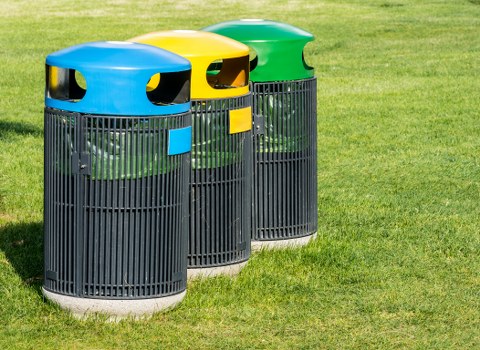
 Hazardous materials and segregation: Where hazardous waste or potentially harmful substances are present, specialist handling procedures will be used. This includes segregation of general waste, recyclable materials and hazardous items; safe containment of sharps or biological waste; and correct labelling for collection. Office clearance teams must follow legal waste transfer documentation and local disposal requirements while maintaining safety standards for rubbish clearance operations.
Controls and Personal Protective Equipment (PPE): Controls to reduce exposure and injury include the following measures:
- Use of gloves, safety footwear, eye protection and hi-vis clothing where appropriate.
- Provision and use of mechanical lifting aids and trolleys to limit manual handling.
- Installation of warning signs, barriers and traffic management where vehicle movements occur.
Operational Procedures, Monitoring and Review
Safe working procedures: Office clearance and rubbish removal operations must be carried out to published procedures covering site set-up, task sequencing, lifting procedures and vehicle loading. Written job briefs or toolbox talks should be given before work commences. Vehicles engaged in commercial clearance must be loaded safely, secured and operated only by trained drivers. Site welfare arrangements such as rest breaks, hydration and access to first aid must be provided for all operatives.
 Emergency and incident response: Emergency arrangements include the provision of first aid equipment, trained first aiders and clear procedures for fire, evacuation and medical emergencies. All incidents, near misses and injuries must be reported and recorded promptly. Incident investigation will determine root causes and corrective actions to prevent recurrence. Strong emphasis is placed on learning from events and sharing lessons across operations.
 Training, monitoring and continual improvement: Competence is central to safe office clearance. Induction training, role-specific instruction, refresher courses and periodic competence assessments shall be provided for employees and subcontractors. Performance is monitored through audits, inspections and routine safety checks. The policy will be reviewed at defined intervals or after significant incidents or changes in law. Management will set measurable targets to improve health and safety outcomes and will ensure that resources are allocated to meet those objectives.
Legal compliance and policy review: The organisation will work to comply with applicable health and safety legislation and best practice relevant to office clearance, waste handling and rubbish removal. This policy is a living document; it will be reviewed at least annually and revised when operational changes, technological developments or regulatory updates occur. Records of training, risk assessments, permits and waste transfers will be maintained to demonstrate compliance and to support continual improvement.
Commitment: Management and staff are required to cooperate in implementing this policy across all workplace activities involving office clearance and rubbish removal. By adhering to these principles we aim to protect people, the environment and property while delivering an effective and safe clearance service. This policy should be read and applied alongside task-specific method statements and safe systems of work.
